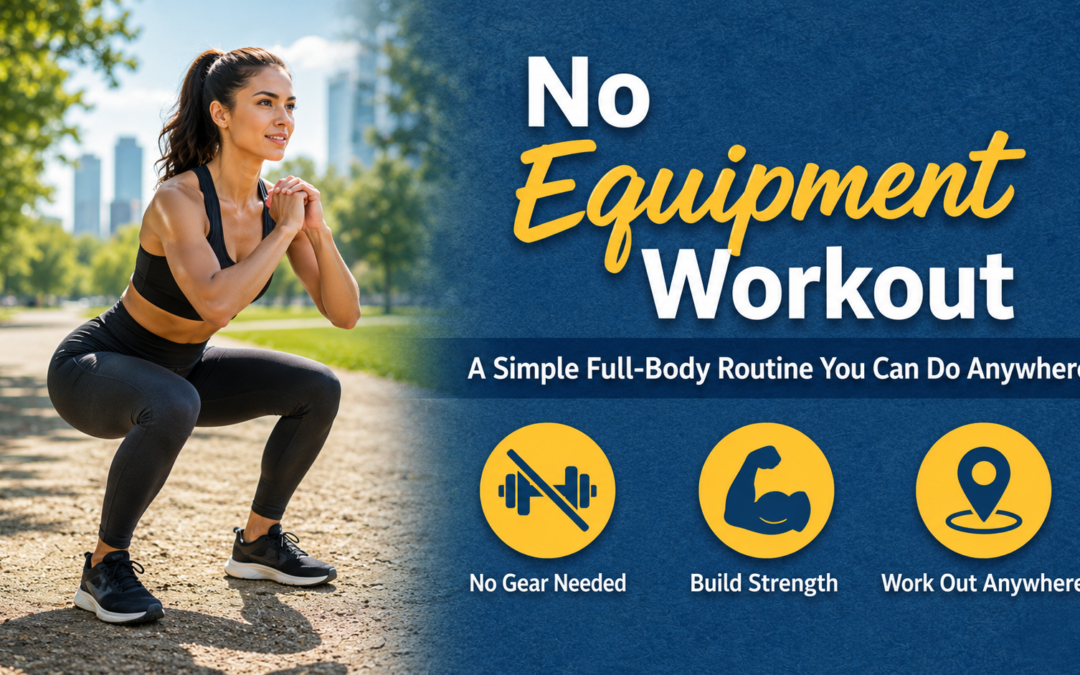


You do not need a gym membership, expensive machines, or a pile of dumbbells to get a great workout. A no equipment workout uses your own body weight to build strength, improve endurance, burn calories, and help you stay consistent from home, a hotel room, a park, or almost anywhere with a little open space.
Whether you are just getting started or looking for a quick routine on a busy day, this simple full-body workout can help you move better and feel stronger without needing any gear.
Why Choose a No Equipment Workout?
No equipment workouts are one of the easiest ways to stay active because they remove common barriers. You do not have to commute to the gym, wait for machines, or buy fitness equipment. You can exercise on your own schedule and adjust the intensity based on your fitness level.
Bodyweight exercises can also be very effective. Movements like squats, push-ups, lunges, planks, and mountain climbers work multiple muscle groups at once. This helps you build functional strength, improve coordination, and increase your heart rate for a more efficient workout.
How to Warm Up
Before starting your workout, spend 3 to 5 minutes warming up. A good warm-up prepares your muscles and joints while gradually increasing your heart rate.
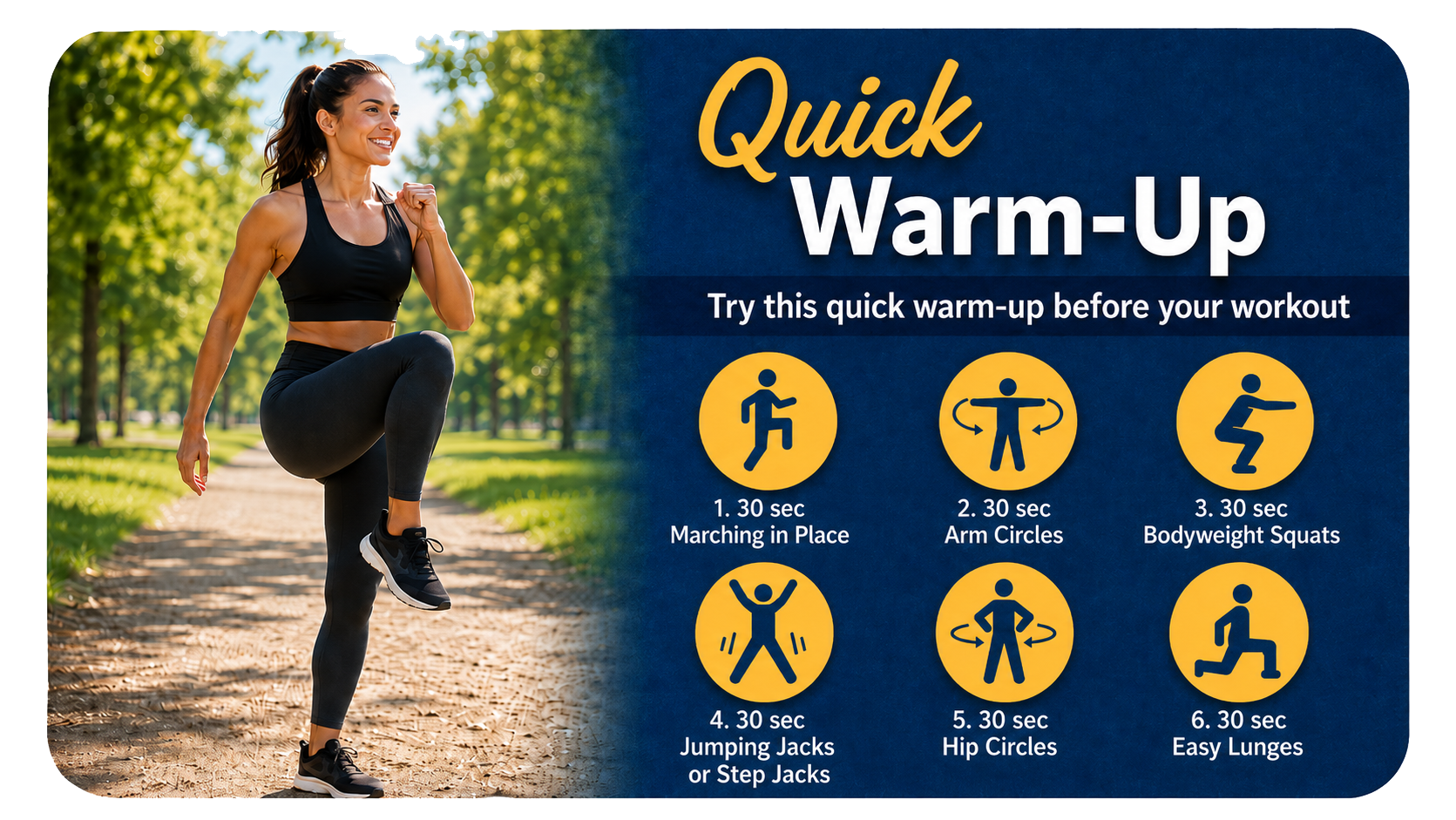
Try this quick warm-up:
- 30 seconds of marching in place
- 30 seconds of arm circles
- 30 seconds of bodyweight squats
- 30 seconds of jumping jacks or step jacks
- 30 seconds of hip circles
- 30 seconds of easy lunges
Once your body feels warmer and your breathing has picked up slightly, you are ready to begin.
Full-Body No Equipment Workout
Complete each exercise for 40 seconds, then rest for 20 seconds. After finishing all exercises, rest for 1 to 2 minutes. Repeat the circuit 2 to 4 times depending on your fitness level.
1. Bodyweight Squats
Bodyweight squats target your legs, glutes, and core. Stand with your feet about shoulder-width apart. Push your hips back, bend your knees, and lower your body as if you are sitting into a chair. Keep your chest lifted and your weight mostly through your heels. Stand back up and repeat.
To make it easier, reduce the depth of the squat. To make it harder, slow down the lowering phase or add a small jump at the top.
2. Push-Ups
Push-ups strengthen your chest, shoulders, triceps, and core. Start in a high plank position with your hands under your shoulders. Lower your body toward the floor, keeping your core tight and your body in a straight line. Push back up to the starting position.
Beginners can do push-ups from the knees or against a wall. For a more advanced version, try decline push-ups or slow-tempo push-ups.
3. Reverse Lunges
Reverse lunges work your quads, hamstrings, glutes, and balance. Stand tall, then step one foot back and lower your back knee toward the floor. Push through your front foot to return to standing, then switch sides.
Keep your front knee in line with your toes and avoid leaning too far forward. Move slowly and focus on control.
4. Mountain Climbers
Mountain climbers are great for cardio, core strength, and total-body conditioning. Start in a high plank position. Drive one knee toward your chest, then quickly switch legs as if you are running in place while holding the plank.
To make this move easier, slow it down and step each foot forward one at a time. To make it harder, increase your speed while keeping your hips stable.
5. Glute Bridges
Glute bridges target your glutes, hamstrings, and lower back. Lie on your back with your knees bent and feet flat on the floor. Press through your heels and lift your hips toward the ceiling. Squeeze your glutes at the top, then lower with control.
For an added challenge, try single-leg glute bridges.
6. Plank
The plank is a simple but powerful core exercise. Rest on your forearms and toes, keeping your body in a straight line from head to heels. Tighten your abs, squeeze your glutes, and avoid letting your hips sag.
Beginners can hold the plank from the knees. Advanced exercisers can add shoulder taps or plank jacks.
7. High Knees
High knees raise your heart rate and improve cardio endurance. Stand tall and drive your knees up toward your chest one at a time. Pump your arms and move at a pace that feels challenging but controlled.
For a low-impact option, march in place while lifting your knees high.
Cool Down and Stretch
After your workout, take 3 to 5 minutes to cool down. Walk slowly in place until your breathing begins to settle. Then stretch your major muscle groups.
Good post-workout stretches include:
- Hamstring stretch
- Quad stretch
- Chest opener
- Child’s pose
- Hip flexor stretch
- Shoulder stretch
Hold each stretch for about 20 to 30 seconds and breathe deeply.
Beginner Modification
If you are new to exercise, start with shorter intervals. Try 25 seconds of work followed by 35 seconds of rest. Complete 1 to 2 rounds and focus on learning proper form.
As you get stronger, increase the work time, reduce rest periods, or add more rounds.
Advanced Challenge
To make this no equipment workout more intense, use a 45-seconds-on, 15-seconds-off format and complete 4 to 5 rounds. You can also add jump squats, burpees, push-up variations, or faster mountain climbers.
The goal is to challenge yourself while still maintaining good technique.
How Often Should You Do This Workout?
You can do this full-body no equipment workout 3 to 4 times per week. On the other days, consider walking, stretching, yoga, or light mobility work to help your body recover.
Consistency matters more than perfection. Even a short 15-minute workout can make a difference when done regularly.
FEATURED VIDEO – Home Workout #5: “Can’t Slow Us Down!”
Final Thoughts
A no equipment workout is one of the most convenient and effective ways to stay active. You can train your whole body, improve your fitness, and build confidence without relying on a gym or special gear.
Start with the version that matches your current fitness level, move with control, and gradually increase the challenge over time. Your body is enough to get started.
Start small. Stay consistent. Let your morning walk set the tone for your day.
Most people don’t struggle because they lack information, they struggle because maintaining consistency is hard when life gets busy.
That’s why I created the Daily Fit Club using the Skool platform
Inside, you’ll find practical fitness advice, accountability, encouragement, and a growing group of people working toward the same goal: building healthier habits that actually fit into real life. Whether you’re looking to move better, improve your energy, lose weight, build strength, or simply stay on track, you’ll have access to resources and support designed to help you make steady progress without feeling overwhelmed.
If you’re tired of starting over and want a simpler, more sustainable approach to fitness, we’d love for you to join us.