


A morning walking routine is one of the easiest ways to improve your health, boost energy, and build a consistent fitness habit. Walking first thing in the morning helps you avoid schedule conflicts and start the day feeling focused and accomplished.
If you want a daily walking routine that actually sticks, here’s how to build one.
Why a Morning Walking Routine Works
Morning walks remove common excuses. By the end of the day, energy and motivation drop — but in the morning, you control your time.
Benefits of a morning walk include:
-
Increased energy and mental clarity
-
Reduced stress and improved mood
-
Better consistency compared to evening workouts
-
Support for weight loss and heart health
Even 15–30 minutes of walking in the morning can deliver long-term results.
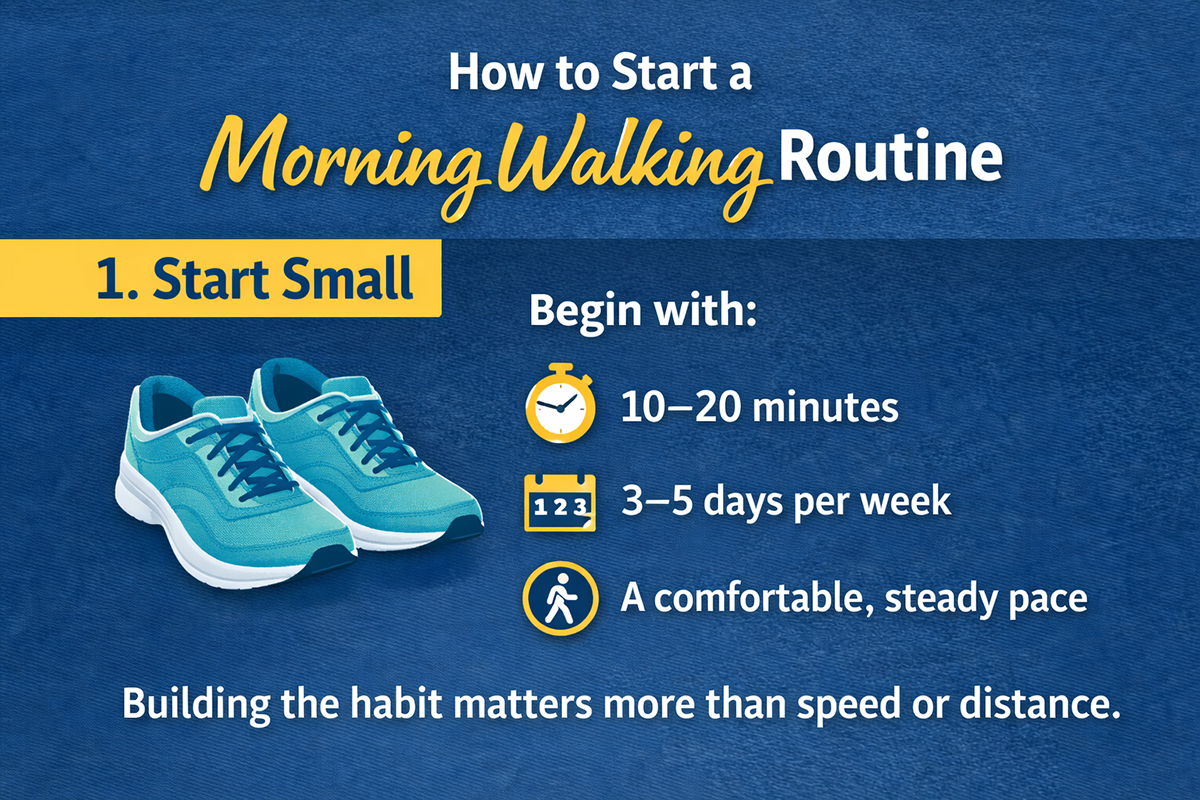
How to Start a Morning Walking Routine
1. Start Small
Begin with:
-
10–20 minutes
-
3–5 days per week
-
A comfortable, steady pace
Building the habit matters more than speed or distance.
2. Prepare the Night Before
Lay out your clothes, set your shoes by the door, and set your alarm slightly earlier. Reducing friction increases follow-through.
3. Keep It Simple
Wake up → drink water → light stretch → walk.
Avoid overcomplicating it. Focus on consistency.
4. Have a Backup Plan
If it rains or you oversleep:
-
Walk indoors
-
Use a treadmill
-
Do a quick 10-minute walk
Consistency beats perfection.
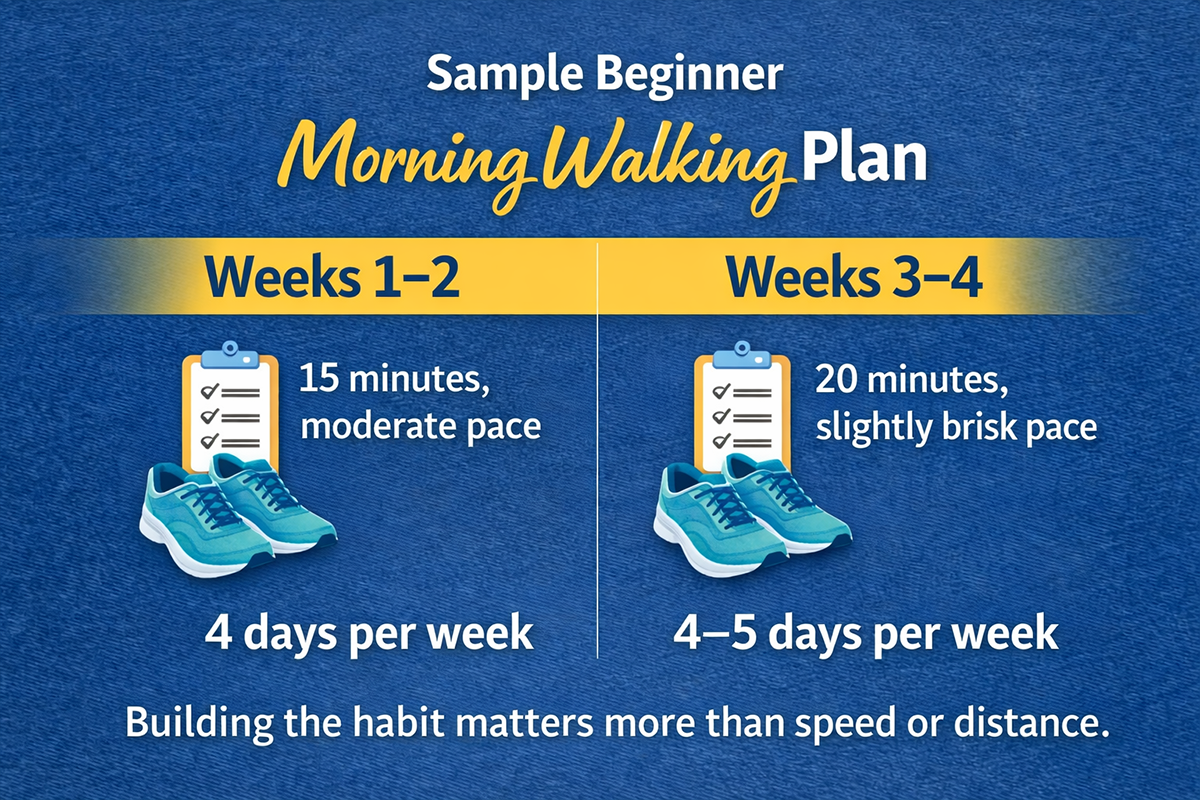
Sample Beginner Morning Walking Plan
Weeks 1–2:
15 minutes, moderate pace, 4 days per week
Weeks 3–4:
20 minutes, slightly brisk pace, 4–5 days per week
Gradually increase time or pace once the routine feels easy.
The Bottom Line
A morning walking routine is one of the most sustainable fitness habits you can build. It improves physical health, mental clarity, and daily productivity — without requiring a gym or complicated program.
Start small. Stay consistent. Let your morning walk set the tone for your day.