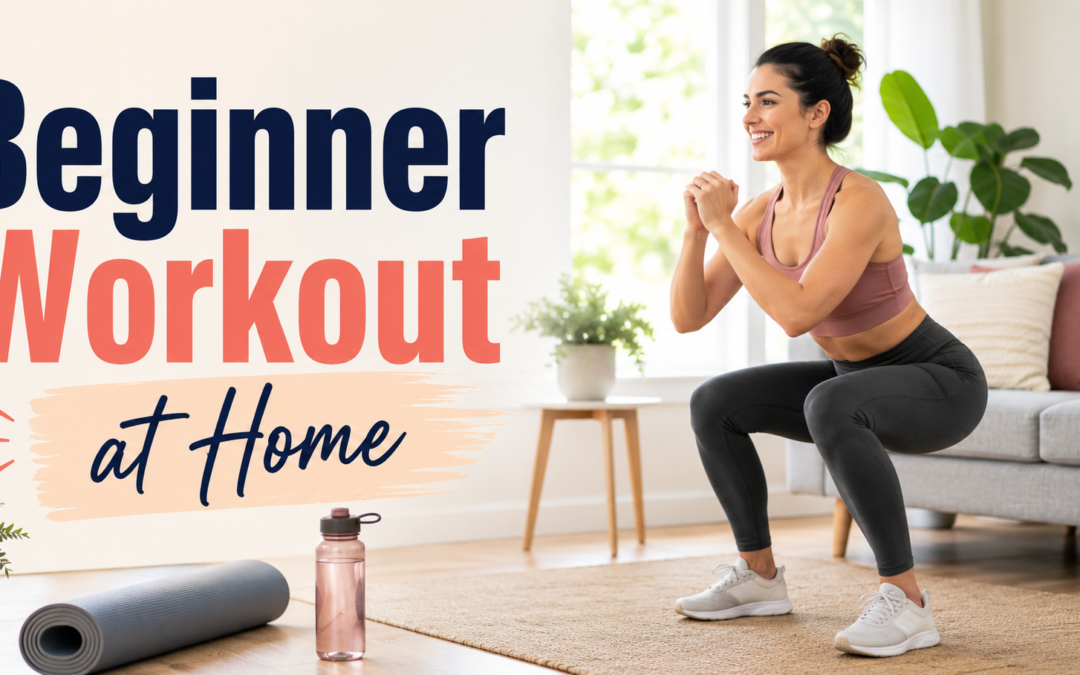


Starting a fitness routine can feel intimidating, especially if you are new to exercise or getting back into it after a long break. The good news is that you do not need a gym membership, expensive equipment, or a complicated plan to begin.
A beginner workout at home can help you build strength, improve endurance, increase mobility, and create a fitness habit that actually sticks. The key is to start simple, move consistently, and focus on good form rather than doing too much too soon.
This guide walks you through an easy beginner-friendly home workout you can do in a small space with no equipment.
Why Start With a Beginner Workout at Home?
Working out at home is one of the easiest ways to begin exercising because it removes many common barriers. You do not have to commute, wait for machines, or feel self-conscious in a gym setting.
A home workout is also flexible. You can do it in the morning, during a lunch break, or in the evening when your schedule allows. For beginners, that flexibility makes it easier to stay consistent.
A beginner workout at home can help you:
- Build basic strength
- Improve balance and coordination
- Increase energy levels
- Support weight management
- Improve cardiovascular fitness
- Build confidence with exercise
- Create a sustainable routine
You do not have to work out for an hour to see progress. Even 20 to 30 minutes a few times per week can make a meaningful difference.
How Often Should Beginners Work Out at Home?
If you are new to exercise, start with this beginner workout at home 2 to 3 times per week. Give yourself at least one rest day between sessions, especially in the beginning.
A simple weekly schedule could look like this:
| Day | Workout |
|---|---|
| Monday | Beginner home workout |
| Tuesday | Rest or light walk |
| Wednesday | Beginner home workout |
| Thursday | Rest or stretching |
| Friday | Beginner home workout |
| Saturday | Light walk or mobility |
| Sunday | Rest |
As your fitness improves, you can add another workout day, increase the number of rounds, or shorten your rest periods.
How to Make This Workout Easier
This workout is designed for beginners, but you can still adjust it based on how you feel.
To make it easier:
- Do one round instead of two or three
- Rest longer between exercises
- Use a chair for support
- Choose wall push-ups instead of floor push-ups
- Reduce each exercise to 20 seconds
- Move at a slower pace
Consistency matters more than intensity when you are just starting.
How to Make This Workout Harder
Once the workout starts to feel easier, you can gradually increase the challenge.
To make it harder:
- Add a third or fourth round
- Work for 40 seconds instead of 30
- Rest for only 15 to 20 seconds
- Try incline or knee push-ups
- Add a pause at the bottom of squats
- Increase your pace during cardio moves
Progress slowly so your body has time to adapt.
Beginner Workout Tips for Success
The best workout is the one you can repeat consistently. Here are a few tips to help you stay on track:
Start small. It is better to complete a short workout regularly than to do one intense workout and feel too sore to continue.
Focus on form. Good technique helps you get better results and reduces your risk of injury.
Track your progress. Write down how many rounds you complete or how you feel after each workout.
Stay patient. Strength, endurance, and confidence build over time.
Celebrate consistency. Every workout completed is a step forward.
Common Mistakes Beginners Should Avoid
When starting a beginner workout at home, it is easy to do too much too soon. Avoid these common mistakes:
Skipping the warm-up. Your body needs time to prepare for exercise.
Holding your breath. Try to breathe steadily during each movement.
Rushing through exercises. Controlled movement is usually more effective than speed.
Ignoring pain. Muscle fatigue is normal, but sharp pain is not. Stop if something feels wrong.
Expecting instant results. Fitness progress takes time, but consistency adds up.
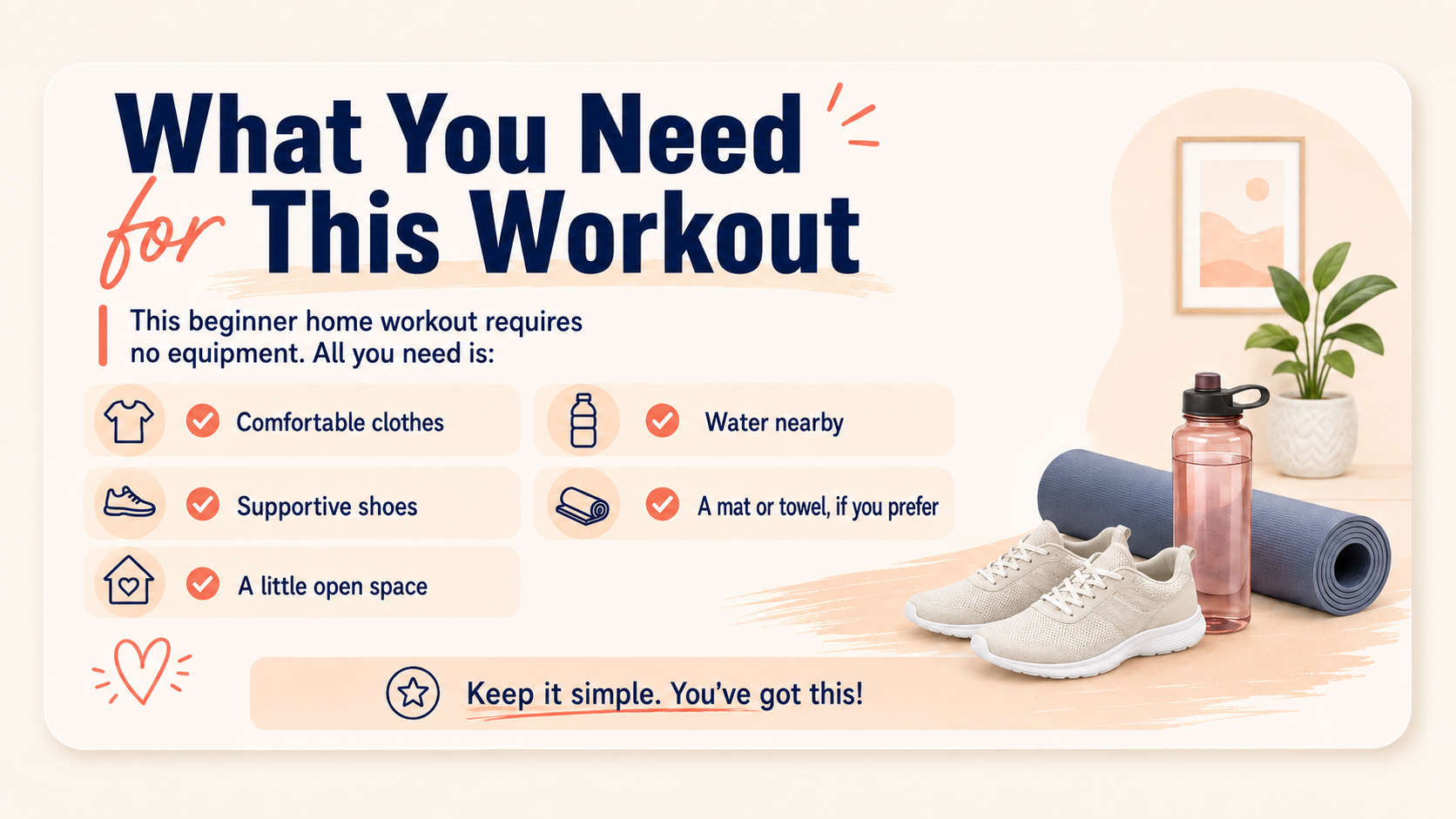
What You Need for This Workout
This beginner home workout requires no equipment. All you need is:
- Comfortable clothes
- Supportive shoes
- A little open space
- Water nearby
- A mat or towel, if you prefer
Move at your own pace and take breaks whenever needed. The goal is to finish feeling accomplished, not exhausted.
Beginner Workout at Home
This routine includes a warm-up, a simple full-body circuit, and a cool-down. It is designed for beginners and can be adjusted based on your current fitness level.
Warm-Up: 5 Minutes
A warm-up prepares your body for movement and helps reduce the risk of injury. Move slowly at first, then gradually increase your pace.
Do each movement for 30 seconds:
- March in place
- Arm circles
- Shoulder rolls
- Side steps
- Hip circles
- Bodyweight good mornings
- Easy squats
- Step jacks
- Alternating knee lifts
- Light marching in place
After your warm-up, you should feel warmer, looser, and ready to begin the workout
FEATURED VIDEO – Home Workout #1 – Just Get Moving
The Beginner Home Workout Circuit
Complete each exercise for 30 seconds, then rest for 30 seconds before moving to the next exercise.
After completing all exercises, rest for 1 to 2 minutes. Repeat the circuit 2 to 3 times.
1. Bodyweight Squats
Bodyweight squats help strengthen your legs, glutes, and core.
Stand with your feet about shoulder-width apart. Bend your knees and push your hips back as if sitting into a chair. Keep your chest lifted and your heels on the floor. Stand back up and repeat.
Beginner tip: If regular squats feel difficult, squat to a chair and stand back up.
2. Wall Push-Ups
Wall push-ups are a beginner-friendly way to build upper-body strength.
Stand facing a wall with your hands placed at shoulder height. Step your feet back slightly. Bend your elbows and lower your chest toward the wall, then push back to the starting position.
Beginner tip: The farther your feet are from the wall, the more challenging the movement becomes.
3. Glute Bridges
Glute bridges strengthen your glutes, hamstrings, and lower back.
Lie on your back with your knees bent and feet flat on the floor. Press through your heels and lift your hips toward the ceiling. Squeeze your glutes at the top, then slowly lower back down.
Beginner tip: Move slowly and focus on control instead of speed.
4. Step Jacks
Step jacks are a low-impact alternative to jumping jacks.
Step one foot out to the side while raising your arms overhead. Step back to the center, then repeat on the other side.
Beginner tip: Keep the movement light and steady. You can increase the pace as you get stronger.
5. Bird Dogs
Bird dogs help improve core stability, balance, and coordination.
Start on your hands and knees. Extend your right arm and left leg at the same time. Pause briefly, then return to the starting position. Repeat on the opposite side.
Beginner tip: Keep your hips level and move slowly.
6. Reverse Lunges
Reverse lunges work your legs and glutes while being easier on the knees than forward lunges.
Stand tall. Step one foot back and bend both knees slightly. Push through your front foot to return to standing. Alternate sides.
Beginner tip: Hold onto a wall or chair for balance if needed.
7. Plank From Knees
A knee plank is a beginner-friendly core exercise.
Start on your forearms and knees. Keep your body in a straight line from shoulders to knees. Brace your core and hold the position.
Beginner tip: Start with 10 to 15 seconds if 30 seconds feels too long.
8. Marching in Place
Marching in place helps keep your heart rate up while staying low impact.
Stand tall and lift one knee at a time. Swing your arms naturally and keep a steady pace.
Beginner tip: Increase your pace slightly if you want more cardio.
Cool Down: 5 Minutes
A cool-down helps your heart rate return to normal and reduces muscle tightness.
Hold each stretch for 20 to 30 seconds:
- Standing hamstring stretch
- Quad stretch
- Chest stretch
- Shoulder stretch
- Child’s pose
- Seated forward fold
- Deep breathing
Move slowly and avoid forcing any stretch. The goal is to relax your body after the workout.
Final Thoughts
A beginner workout at home is one of the simplest ways to start building a healthier, stronger body. You do not need equipment, a large space, or advanced exercises to make progress.
Start with this full-body routine 2 to 3 times per week, move at your own pace, and focus on building the habit. Over time, the exercises will feel easier, your confidence will grow, and you can continue increasing the challenge.
The most important step is getting started. Today’s short workout can become the foundation for long-term fitness.
Most people don’t struggle because they lack information, they struggle because maintaining consistency is hard when life gets busy.
That’s why I created the Daily Fit Club using the Skool platform
Inside, you’ll find practical fitness advice, accountability, encouragement, and a growing group of people working toward the same goal: building healthier habits that actually fit into real life. Whether you’re looking to move better, improve your energy, lose weight, build strength, or simply stay on track, you’ll have access to resources and support designed to help you make steady progress without feeling overwhelmed.
If you’re tired of starting over and want a simpler, more sustainable approach to fitness, we’d love for you to join us.