

Strength Training at Home: How to Build Muscle Without a Gym
Strength training at home is one of the most effective ways to build muscle, improve balance, increase energy, and stay consistent with your fitness routine. You do not need a full gym, expensive machines, or a complicated workout plan to get stronger. With the right exercises and a simple structure, you can create an effective strength training routine from the comfort of your home.
Whether you are new to exercise or looking for a convenient alternative to the gym, home strength training can help you stay active, protect your joints, and support long-term health.
Why Strength Training at Home Works
Many people think strength training requires heavy weights or gym equipment, but your body can provide plenty of resistance on its own. Exercises like squats, push-ups, lunges, planks, and glute bridges can challenge your muscles and help you build strength over time.
The biggest advantage of working out at home is convenience. You can exercise on your own schedule, avoid commute time, and stay consistent even on busy days. A short, focused workout done regularly is often more effective than an intense gym routine that is hard to maintain.
Benefits of Strength Training at Home
Strength training supports more than muscle growth. It can improve the way your body feels and functions every day.
Regular strength workouts may help you:
Improve posture and stability
Build lean muscle
Support healthy bones and joints
Increase daily energy
Improve balance and coordination
Make everyday tasks easier
Support long-term weight management
As you get stronger, activities like carrying groceries, climbing stairs, lifting household items, and staying active with family can become easier.
What Equipment Do You Need?
You can start strength training at home with no equipment at all. Bodyweight exercises are enough for beginners and can still be challenging for more advanced workouts.
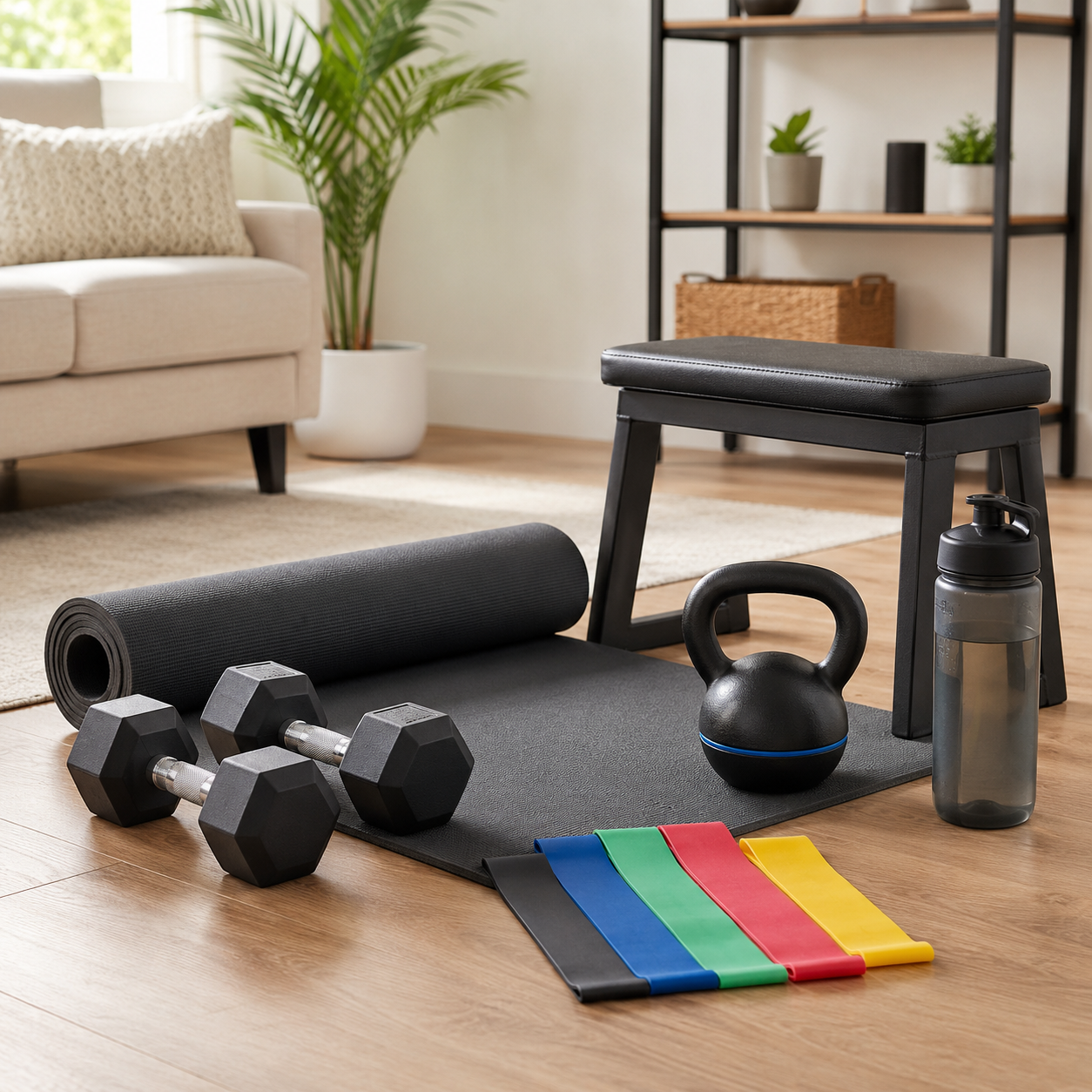
However, a few simple tools can make your workouts more versatile:
Dumbbells
Resistance bands
A yoga or exercise mat
A sturdy chair or bench
A kettlebell
You do not need to buy everything at once. Start with bodyweight movements, then add resistance as your strength improves.
FEATURED VIDEO – Dumbbell Shoulder Press
Best Strength Training Exercises to Do at Home
A good home strength routine should train the major muscle groups: legs, glutes, core, back, chest, shoulders, and arms.
1. Squats
Squats strengthen your legs, glutes, and core. Stand with your feet about shoulder-width apart, lower your hips as if sitting in a chair, then press through your heels to stand back up.
2. Push-Ups
Push-ups work your chest, shoulders, arms, and core. Beginners can start with wall push-ups, incline push-ups on a counter, or knee push-ups.
3. Lunges
Lunges strengthen your legs and improve balance. Step one foot forward, lower your body with control, then return to standing. Alternate sides.
4. Glute Bridges
Glute bridges target the glutes, hamstrings, and lower back. Lie on your back with knees bent, lift your hips, squeeze your glutes, then lower slowly.
5. Planks
Planks build core strength and stability. Keep your body in a straight line from shoulders to heels and hold the position while keeping your core tight.
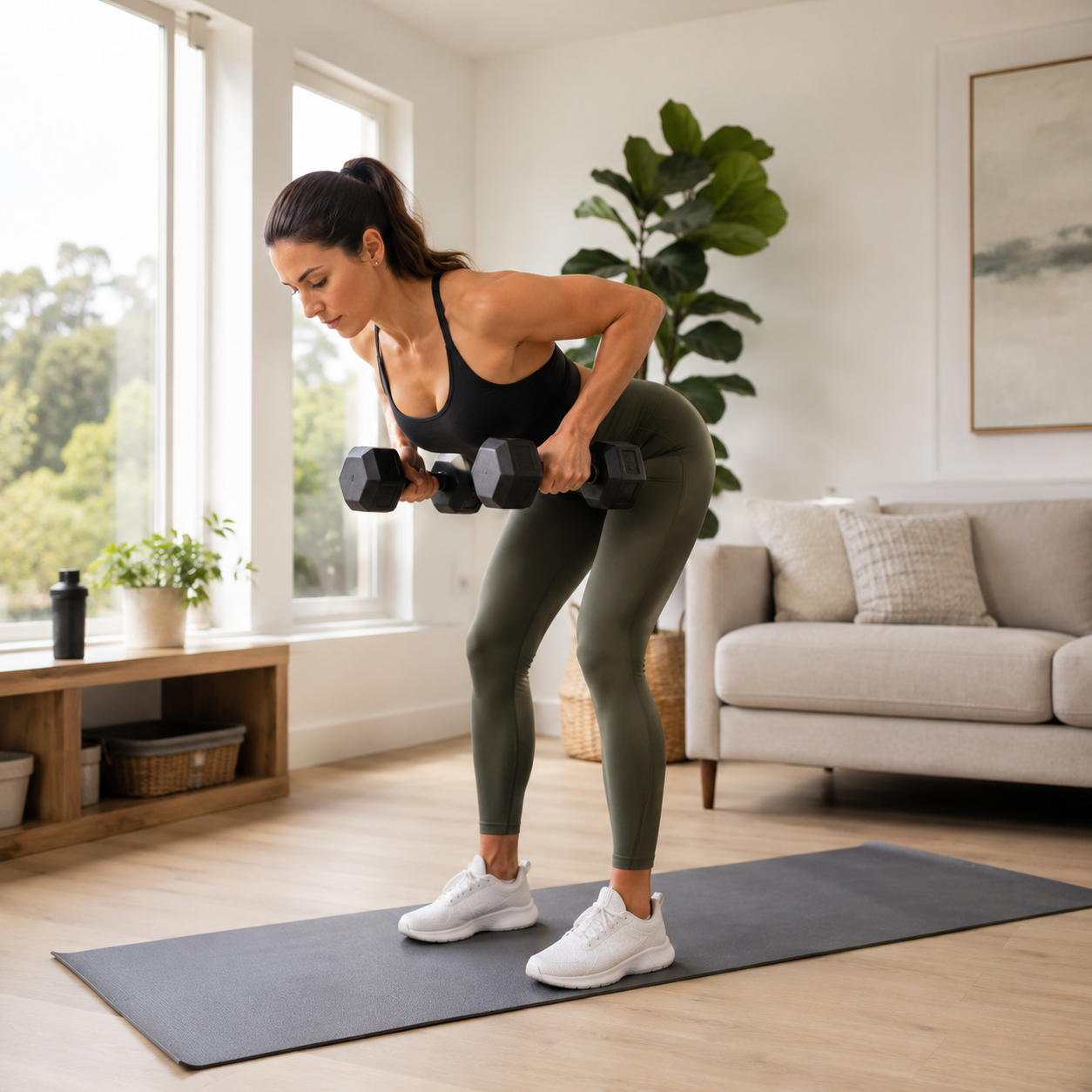
6. Dumbbell Rows or Band Rows
Rows strengthen the back and improve posture. Use dumbbells, resistance bands, or even household items if needed.
7. Shoulder Press
Shoulder presses work the shoulders and arms. Use dumbbells, resistance bands, or light household objects, pressing upward with control.
Simple At-Home Strength Training Routine
Here is a beginner-friendly strength workout you can do at home two to four times per week.
Warm up for 5 minutes with marching in place, arm circles, hip circles, and light bodyweight squats.
Then complete 2 to 3 rounds of:
10 squats
8 push-ups or modified push-ups
10 lunges per side
12 glute bridges
20 to 30 second plank
10 rows per side
10 shoulder presses
Rest 30 to 60 seconds between exercises as needed.
As you get stronger, you can add more rounds, increase the number of repetitions, slow down each movement, or add weights.
How Often Should You Strength Train at Home?
Most beginners can start with two or three strength workouts per week. This gives your muscles time to recover while still building consistency.
A simple weekly plan could look like this:
Monday: Strength training
Tuesday: Walking or light cardio
Wednesday: Strength training
Thursday: Rest or stretching
Friday: Strength training
Saturday: Cardio, mobility, or outdoor activity
Sunday: Rest
You do not need to work out every day to see progress. Recovery is an important part of getting stronger.
Tips for Better Results
Focus on proper form before adding more weight or speed. Controlled movement is more effective and safer than rushing through exercises.
Start with exercises that match your current fitness level. For example, choose incline push-ups instead of floor push-ups if needed. Small progressions over time lead to better long-term results.
Track your workouts so you can see your progress. Write down the exercises, sets, reps, and any weights used. As the movements become easier, increase the challenge slightly.
Most importantly, stay consistent. Strength training works best when it becomes part of your regular routine.
Common Mistakes to Avoid
One of the most common mistakes is doing too much too soon. Starting with an overly intense workout can lead to soreness, frustration, or inconsistency. Begin with manageable sessions and build gradually.
Another mistake is ignoring warm-ups and cool-downs. A few minutes of movement before and after your workout can help your body feel better and reduce stiffness.
It is also important not to train the same muscles hard every day. Muscles need time to recover and grow stronger.
Final Thoughts on Strength Training at Home
Strength training at home is simple, effective, and accessible for nearly every fitness level. You can build muscle, improve balance, increase confidence, and support your overall health without stepping into a gym.
Start with basic movements, focus on good form, and stay consistent. Over time, your body will become stronger, more capable, and better prepared for everyday life.
Start with the version that matches your fitness level, focus on controlled movement, and build from there. With consistency, bodyweight training can become a simple and effective part of your weekly fitness plan.
Most people don’t struggle because they lack information, they struggle because maintaining consistency is hard when life gets busy.
That’s why I created the Daily Fit Club using the Skool platform
Inside, you’ll find practical fitness advice, accountability, encouragement, and a growing group of people working toward the same goal: building healthier habits that actually fit into real life. Whether you’re looking to move better, improve your energy, lose weight, build strength, or simply stay on track, you’ll have access to resources and support designed to help you make steady progress without feeling overwhelmed.
If you’re tired of starting over and want a simpler, more sustainable approach to fitness, we’d love for you to join us.