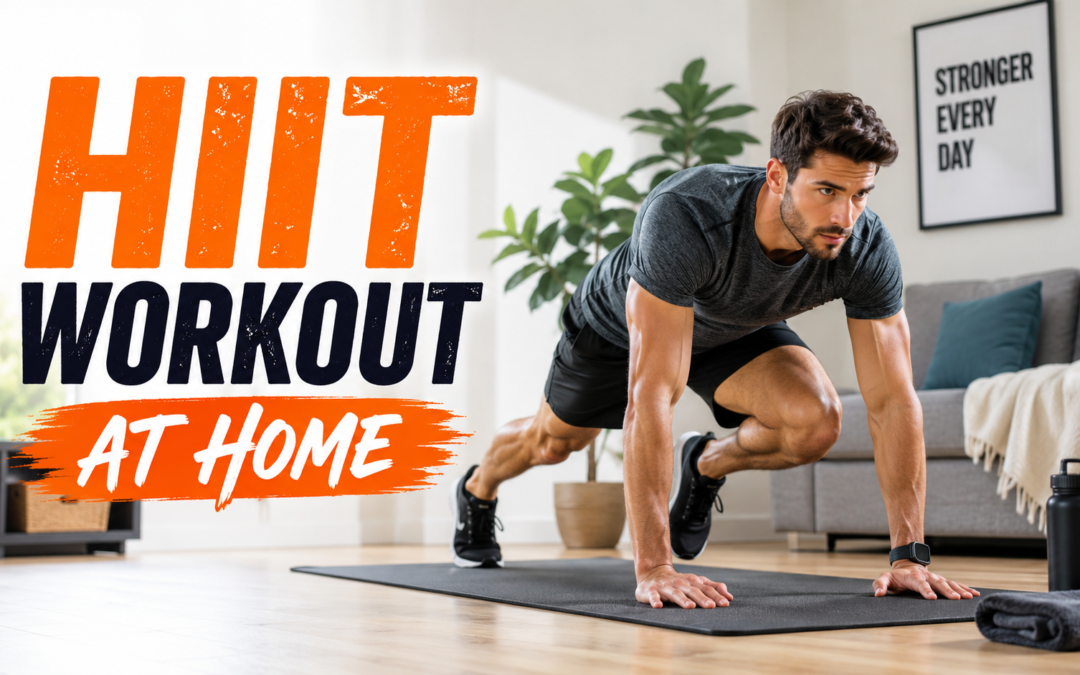


High-intensity interval training is one of the most efficient ways to exercise at home. A good HIIT workout can help you build endurance, burn calories, improve conditioning, and strengthen your body without needing a gym or expensive equipment.
The best part is that a HIIT workout at home can be simple. You do not need complicated moves or a long session. With the right structure, you can get a challenging full-body workout in 20 to 30 minutes using only your bodyweight.
This guide covers what HIIT is, how to do it safely, and a beginner-friendly at-home HIIT workout you can start today.
What Is a HIIT Workout?
HIIT stands for high-intensity interval training. It combines short bursts of harder exercise with brief periods of rest or lower-intensity movement.
Instead of exercising at one steady pace, you alternate between work and recovery. For example, you might do 30 seconds of squats, rest for 15 seconds, then move into mountain climbers.
A basic HIIT format looks like this:
30 seconds of exercise
15 seconds of rest
Repeat for several rounds
The goal is not to go all-out until you collapse. The goal is to work hard during each interval while maintaining good form.
Benefits of Doing HIIT at Home
A HIIT workout at home is popular because it is fast, flexible, and effective. You can adjust the intensity based on your fitness level and choose exercises that match your space and ability.
Some of the biggest benefits include:
- No equipment required
- Great for small spaces
- Can be completed in 20 to 30 minutes
- Helps improve cardio fitness
- Builds full-body strength and endurance
- Easy to modify for beginners
- Works well with busy schedules
HIIT is also easy to progress over time. As you get stronger, you can increase the work time, reduce the rest time, or add more rounds.
What You Need for This Workout
This at-home HIIT workout requires no equipment. All you need is:
- Comfortable workout clothes
- Supportive shoes
- Water nearby
- A little open space
- A mat or towel if you prefer floor exercises
- A timer or interval app
Choose a space where you can move safely. You should have enough room to step side to side, squat, and get down to the floor if needed.
Before You Start: Safety Tips
HIIT can be intense, so it is important to listen to your body. Beginners should start at a moderate pace and focus on control before speed.
Keep these tips in mind:
Warm up before starting.
Move with good form.
Rest longer when needed.
Choose low-impact options if jumping bothers your joints.
Stop if you feel dizzy, lightheaded, or have sharp pain.
Stay hydrated.
You should feel challenged, but you should still be able to control your movements.
Quick Warm-Up
Before starting the main workout, spend 3 to 5 minutes warming up your body.
Try this simple warm-up:
30 seconds marching in place
30 seconds arm circles
30 seconds bodyweight squats
30 seconds step jacks or jumping jacks
30 seconds hip circles
30 seconds easy reverse lunges
30 seconds light jogging in place
30 seconds shoulder rolls
After the warm-up, take a short sip of water and get ready for the main circuit.
HIIT Workout Summary
| Exercise | Work | Rest |
|---|---|---|
| Bodyweight Squats | 30 seconds | 15 seconds |
| Mountain Climbers | 30 seconds | 15 seconds |
| Reverse Lunges | 30 seconds | 15 seconds |
| Push-Ups | 30 seconds | 15 seconds |
| High Knees | 30 seconds | 15 seconds |
| Plank Shoulder Taps | 30 seconds | 15 seconds |
| Skaters | 30 seconds | 15 seconds |
| Burpees or Half Burpees | 30 seconds | 15 seconds |
FEATURED VIDEO – Home Workout #2 – Kick My Butt
At-Home HIIT Workout
For this workout, perform each exercise for 30 seconds, then rest for 15 seconds before moving to the next exercise.
Complete 3 rounds total.
Rest 60 to 90 seconds between rounds.
Exercise 1: Bodyweight Squats
Bodyweight squats target your legs, glutes, and core.
Stand with your feet about shoulder-width apart. Push your hips back, bend your knees, and lower into a squat. Keep your chest lifted and your weight balanced through your feet. Stand back up and repeat.
Make it easier: Squat to a chair or reduce your range of motion.
Make it harder: Add a small jump at the top.
Exercise 2: Mountain Climbers
Mountain climbers raise your heart rate while working your core, shoulders, and legs.
Start in a high plank position with your hands under your shoulders. Drive one knee toward your chest, then switch sides. Move at a pace you can control.
Make it easier: Step your feet in one at a time instead of running them.
Make it harder: Increase your speed while keeping your hips steady.
Exercise 3: Reverse Lunges
Reverse lunges strengthen your legs and improve balance.
Stand tall, step one foot back, and lower your body until both knees bend. Push through your front foot to return to standing, then switch sides.
Make it easier: Use a smaller step back or hold onto a wall for balance.
Make it harder: Add a knee drive as you return to standing.
Exercise 4: Push-Ups
Push-ups work your chest, shoulders, arms, and core.
Start in a plank position. Bend your elbows and lower your chest toward the floor. Press back up while keeping your body in a straight line.
Make it easier: Do push-ups from your knees or with your hands on a sturdy elevated surface.
Make it harder: Slow down the lowering phase.
Exercise 5: High Knees or Marching Knees
High knees are a cardio-focused move that helps boost intensity.
Stand tall and drive your knees upward one at a time. Pump your arms naturally as you move.
Make it easier: March in place at a controlled pace.
Make it harder: Run the knees faster while staying light on your feet.
Exercise 6: Plank Shoulder Taps
Plank shoulder taps strengthen your core, shoulders, and stability.
Start in a high plank. Lift one hand and tap the opposite shoulder. Place it back down and switch sides. Try to keep your hips from rocking.
Make it easier: Widen your feet or perform the move from your knees.
Make it harder: Slow each tap and keep your body very still.
Exercise 7: Skaters
Skaters add lateral movement and help improve coordination.
Step or hop to one side, bringing the opposite leg behind you. Then move to the other side. Keep your knees soft and your chest lifted.
Make it easier: Step side to side instead of hopping.
Make it harder: Make the movement wider and faster.
Exercise 8: Burpees or Half Burpees
Burpees are a full-body conditioning move, but they can be modified.
For a half burpee, place your hands on the floor, step or jump your feet back into a plank, then step or jump them forward and stand up.
Make it easier: Step back one foot at a time and skip the jump.
Make it harder: Add a push-up or jump at the top.
Complete 3 total rounds.
Rest 60 to 90 seconds between rounds.
Beginner Modification
If you are new to HIIT, start with less volume and more rest.
Try this version:
20 seconds work
20 seconds rest
2 rounds total
Choose the low-impact version of each movement. Your workout will still be effective, especially if you focus on good form and steady effort.
Low-Impact HIIT Option
You can still do HIIT without jumping. Low-impact HIIT is a great choice if you live in an apartment, have joint discomfort, or simply prefer quieter workouts.
Use these swaps:
Jumping jacks → Step jacks
High knees → Marching knees
Jump squats → Regular squats
Burpees → Step-back burpees
Skaters → Side steps
Mountain climbers → Slow mountain climbers
Low-impact does not mean easy. Move with intention and keep your rest periods short to maintain intensity.
How Often Should You Do HIIT at Home?
Most people do best with 2 to 4 HIIT workouts per week, depending on their fitness level, recovery, and overall training routine.
Beginners may want to start with 2 days per week. More experienced exercisers can add a third or fourth session, but recovery still matters.
A simple weekly schedule could look like this:
Monday: HIIT workout
Tuesday: Walk or light cardio
Wednesday: Strength training
Thursday: Rest or mobility
Friday: HIIT workout
Saturday: Walk, yoga, or active recovery
Sunday: Rest
Avoid doing hard HIIT workouts every day. Your body needs time to recover and adapt.
How to Make This Workout Harder
Once the workout feels manageable, you can progress it in several ways.
You can:
Increase work time to 40 seconds.
Reduce rest time to 10 seconds.
Add a fourth round.
Choose harder exercise variations.
Move at a faster pace while keeping proper form.
Add light dumbbells if available.
Only change one or two things at a time. Making every part harder at once can increase fatigue and make your form break down.
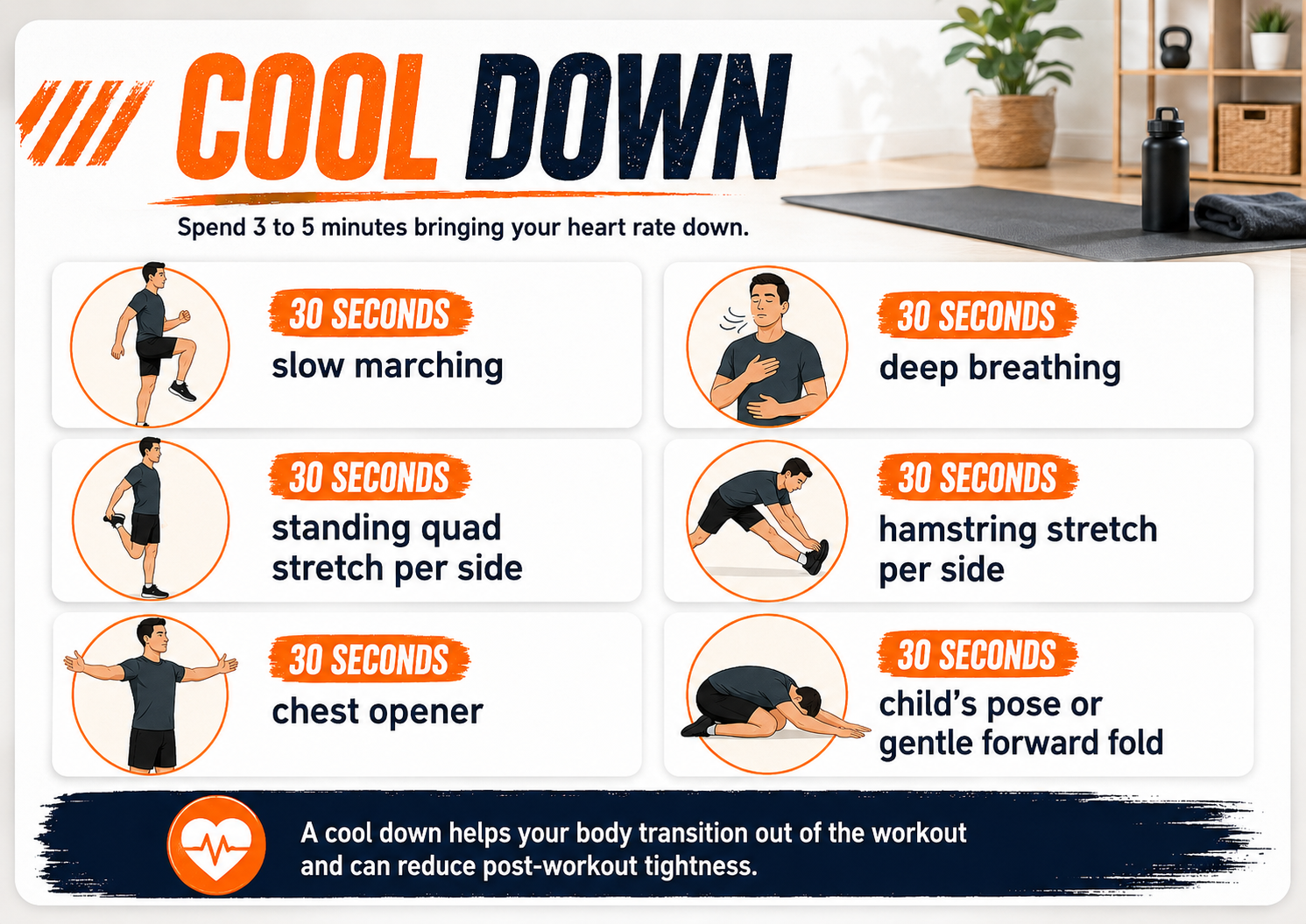
Cool Down
After the workout, spend 3 to 5 minutes bringing your heart rate down.
Try these cool-down movements:
30 seconds slow marching
30 seconds deep breathing
30 seconds standing quad stretch per side
30 seconds hamstring stretch per side
30 seconds chest opener
30 seconds child’s pose or gentle forward fold
A cool down helps your body transition out of the workout and can reduce post-workout tightness.
Common HIIT Mistakes to Avoid
One common mistake is going too hard too soon. HIIT should be challenging, but beginners do not need maximum intensity on every interval.
Another mistake is sacrificing form for speed. Moving faster is not better if your technique falls apart. Controlled reps are more useful than sloppy reps.
Also, avoid skipping the warm-up. Because HIIT includes quick transitions and higher-effort moves, your muscles and joints need to be prepared.
Finally, do not ignore recovery. More HIIT is not always better. Quality sessions with enough rest usually lead to better results.
Final Thoughts
A HIIT workout at home is a simple and effective way to improve your fitness without equipment. You can use bodyweight exercises, short intervals, and beginner-friendly modifications to create a workout that fits your space, schedule, and ability level.
Start with a pace you can control. Focus on proper form. Rest when needed. As your strength and endurance improve, you can gradually increase the challenge.
This workout is a great place to start if you want a fast, full-body routine you can do almost anywhere.
Most people don’t struggle because they lack information, they struggle because maintaining consistency is hard when life gets busy.
That’s why I created the Daily Fit Club using the Skool platform
Inside, you’ll find practical fitness advice, accountability, encouragement, and a growing group of people working toward the same goal: building healthier habits that actually fit into real life. Whether you’re looking to move better, improve your energy, lose weight, build strength, or simply stay on track, you’ll have access to resources and support designed to help you make steady progress without feeling overwhelmed.
If you’re tired of starting over and want a simpler, more sustainable approach to fitness, we’d love for you to join us.